Academics · 3 min read
Physics Practicals: When the Bulb Lights Up, So Does the Idea
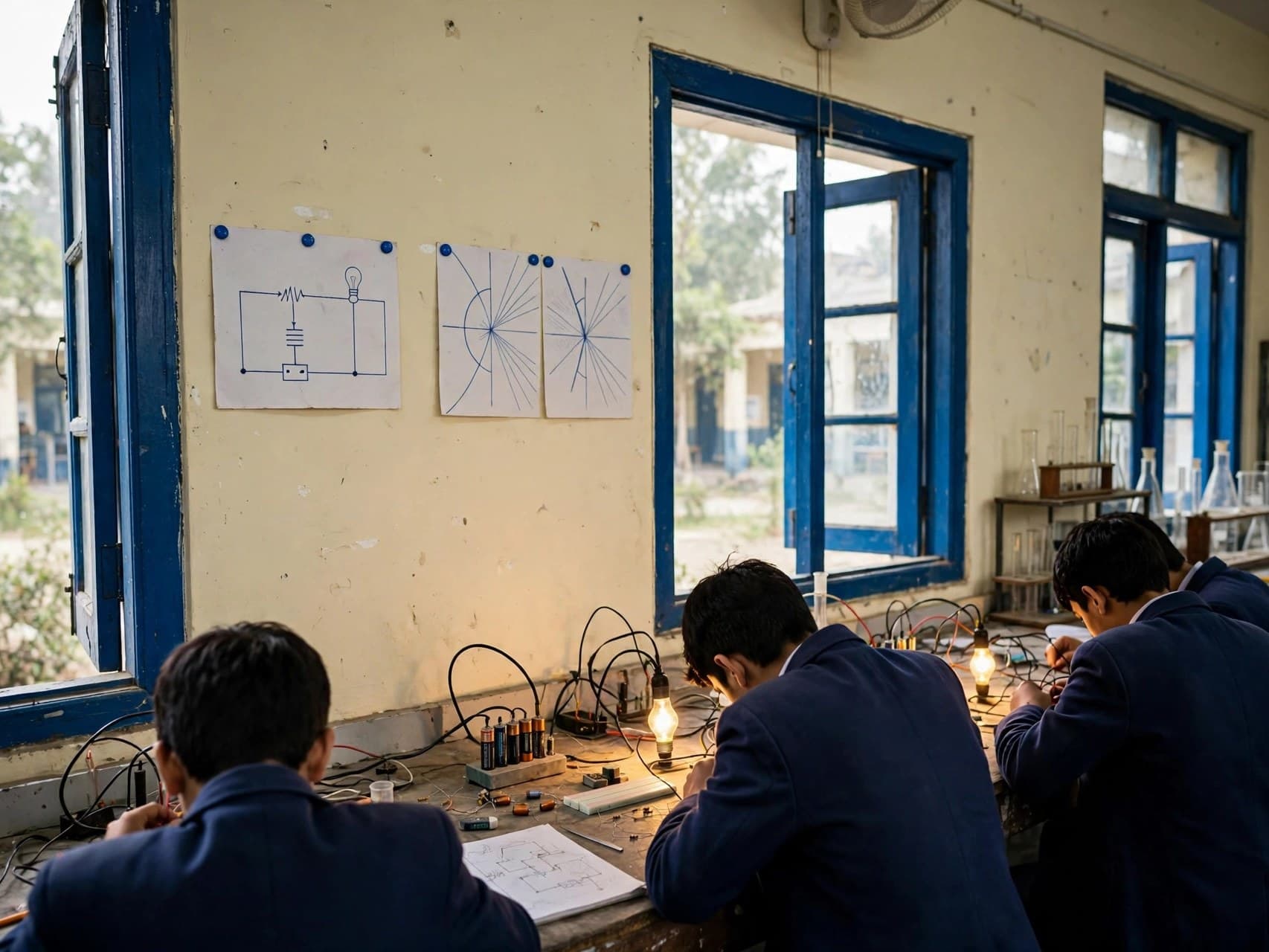
Physics has a reputation problem. Of all the subjects in Class 9 and 10, it is the one students most often call 'hard' — usually in the same week they meet their first long formula. Our experience is simple: physics is only hard on paper. The moment a student connects a battery, two wires and a small bulb, and the bulb actually glows, the formula stops being a formula. It becomes a description of something their hands have done. That is the whole point of physics practicals, and it is why our Secondary classes spend regular time at the lab bench.
The Formula Makes Sense After the Bulb Lights Up
Take resistance. On the board it is a ratio, a symbol, a unit named after a German scientist. At the bench, it is a wire that gets warm and a bulb that glows dimmer when the circuit grows longer. Students still learn the ratio — the board exam will ask for it — but now the symbols stand for things they have seen.
Teachers call this 'anchoring', and it works in both directions. A student who has built a circuit reads a textbook diagram faster. A student who has read the theory walks into the lab already half-knowing what to try. Neither replaces the other. Together, they make physics ordinary — and ordinary is a wonderful thing for a subject to be.
Physics Practicals in the Board Years
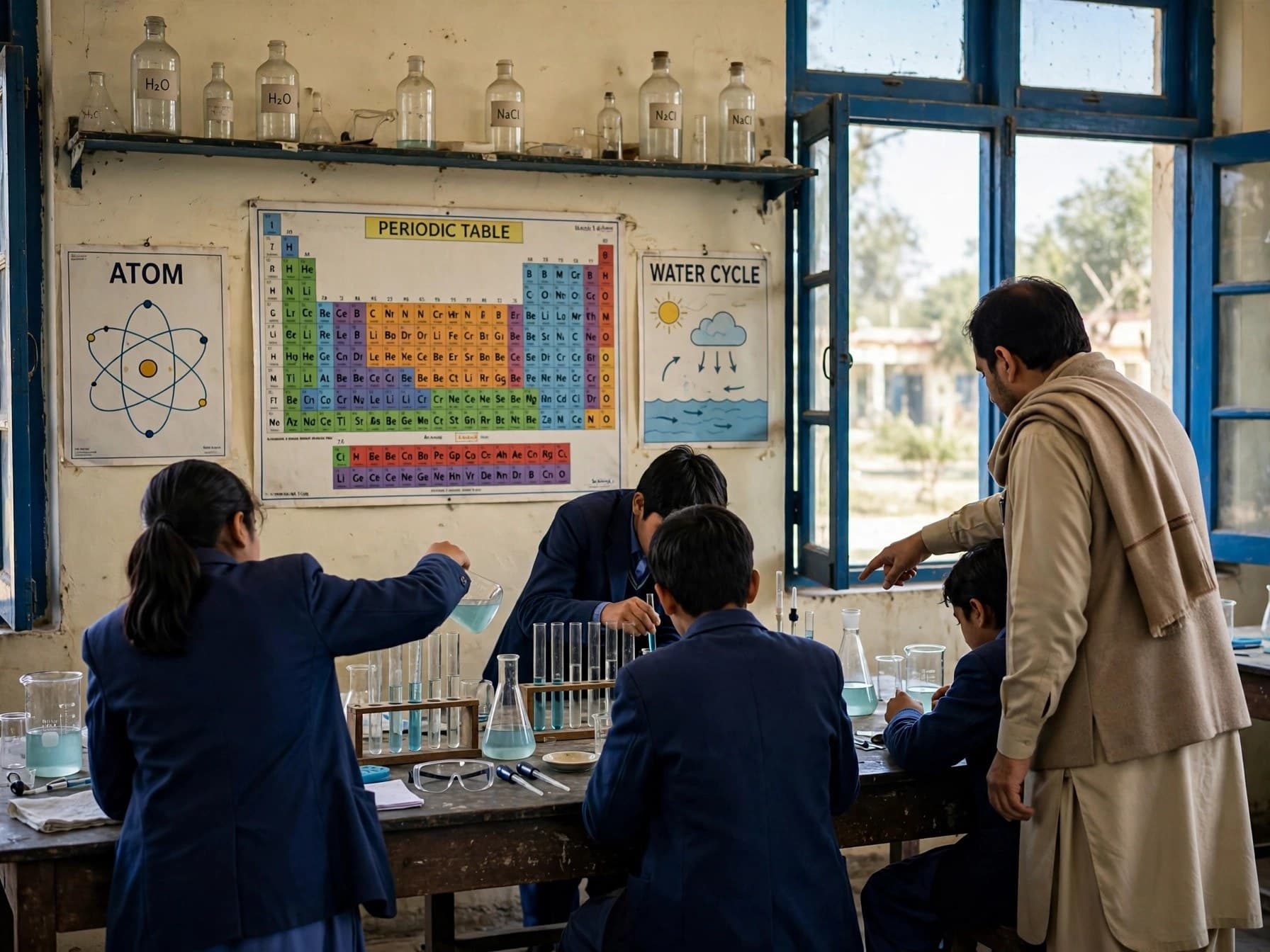
In the Punjab Board pattern, practical work is not a decoration on the course; it is part of how a student's understanding is judged, including their practical notebook. So our Class 9 and 10 physics practicals follow the board's list properly — vernier callipers and screw gauges for measurement, circuits for electricity, lenses and mirrors for light.
Each practical is written up the same day, in the student's own words, with readings in a table and a result that follows from them. It is slower than copying a ready-made file. It is also why, by the time the board practical exam arrives, our students have genuinely done the experiments the examiner is asking about.
Circuits, Bulbs and Lenses on the Bench
Electricity is where the lab earns its keep. Series and parallel circuits stop being diagrams once a student removes one bulb and watches its partner die — or not. Ammeters and voltmeters make sense when you have connected them the wrong way once, gently, and been shown why nothing bad happened but nothing worked either.
Light is quieter work. A ray box, a glass slab and a protractor; a convex lens forming an upside-down image of a window on a screen. Students lean in for that one. There is a small silence when the image sharpens, and it never gets old, even for the teacher.
From the Lab Bench to the Exam Hall
None of this is separate from exam preparation — it is exam preparation, of the durable kind. Numerical problems about circuits are easier for a student who has held the circuit. Definitions stick when they describe real objects. Even the viva questions examiners love — 'what is this instrument, what does it measure' — become simple when the instrument has lived in your hands all year.
Parents sometimes worry that practical periods steal time from 'real study'. We understand the worry; board years are pressured. But an hour at the bench regularly saves three hours of confused revision later. The students who fear physics in September are usually the ones explaining it to a friend by February.
If your child is entering Class 9 or 10 and dreads physics, bring them to see a practical lesson before you decide anything. Fees for Secondary classes are Rs 2,500 per month, scholarships are available on merit and need, and our office is open Monday to Saturday, 8 AM to 4 PM. Call or WhatsApp us on +92 312 6621457 — we will happily let the bulb do the talking.
Admissions Open in Shujabad & Multan
Fees from Rs. 1,500/month. Scholarships available for deserving students. Visit us Mon–Sat, 8 AM to 4 PM, or call us today.
Read Next