Academics · 3 min read
The Science Lab: Where Children Stop Reading and Start Doing
Every child has asked it, usually in week two of term: 'Miss, why do we have to learn this?' Science gives the best answer, but only if children get to touch it. A line in a textbook that says acids turn blue litmus red is forgettable. Watching it happen in a test tube, with your own hands, is not. That is why our science lab is not a showpiece room opened once a year for visitors. It is a working room, used every week, where children learn science the way science actually works — by trying, spilling a little, and asking why.
Reading About It vs Watching It Happen
Reading is a fine servant and a poor master. A child can memorise the parts of a flower in ten minutes and forget them in ten days. Give that same child a flower, a blade and a hand lens, and the lesson survives the year. Practical work anchors memory because the hands teach the head.
It also teaches honesty, which nobody puts in a scheme of work. In the lab, the result is the result. If the solution did not change colour, you cannot write that it did. Children learn to record what they saw, not what they hoped to see. That habit matters far beyond science.
Inside the Science Lab: Safety First, Always
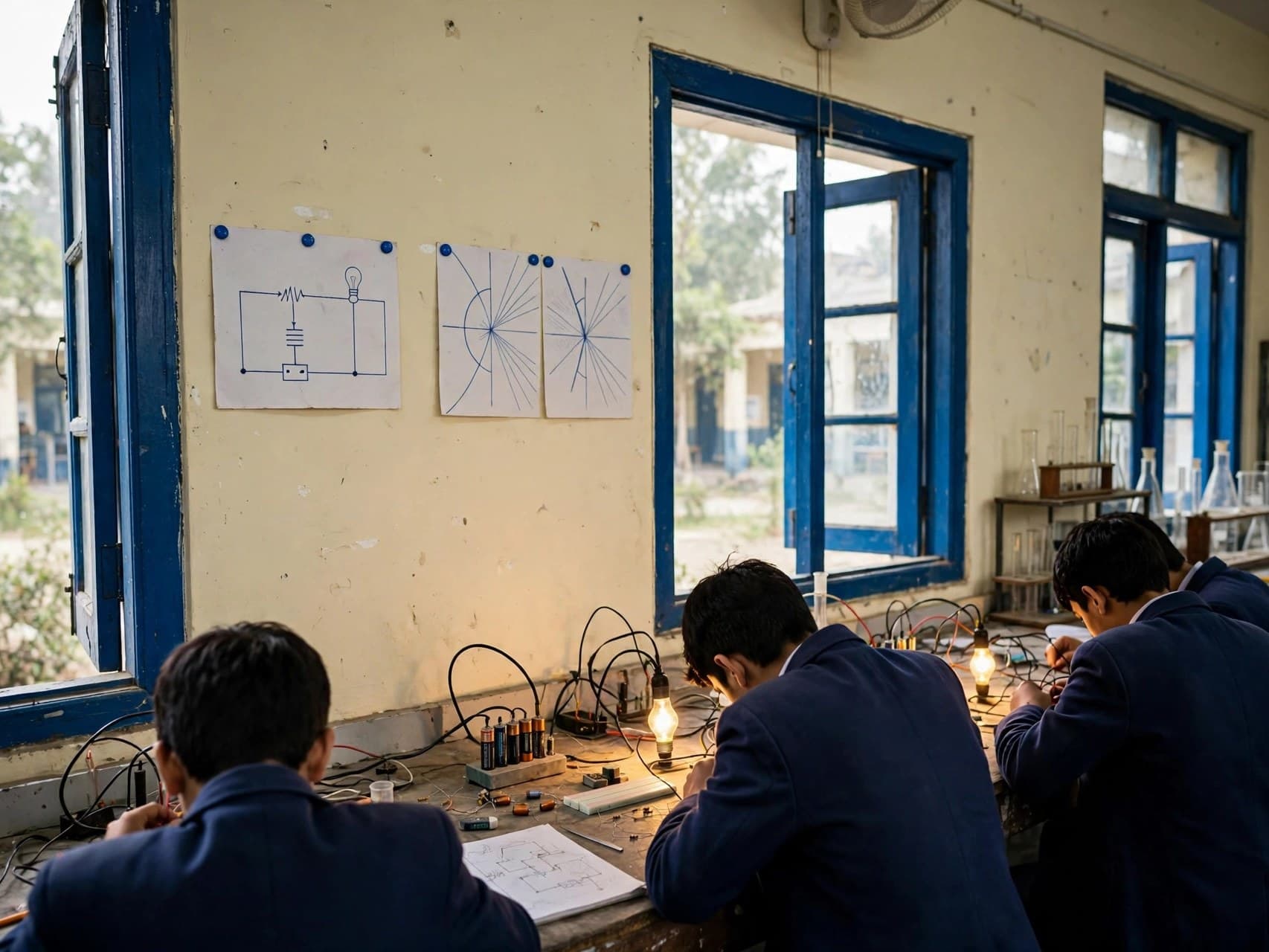
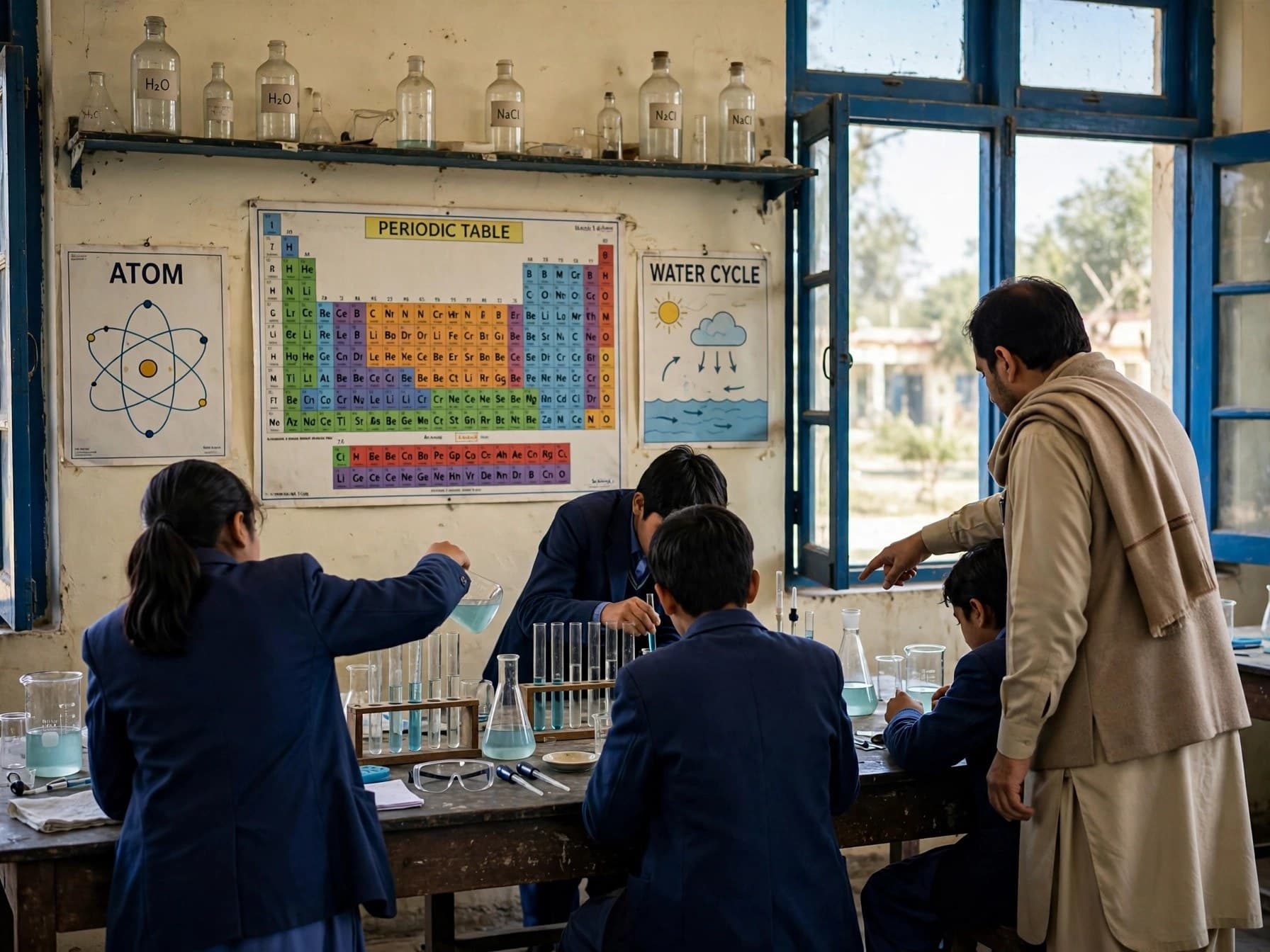
Our science lab has long chemistry benches, sinks, and shelves of the everyday equipment school science honestly needs — test tubes, beakers, burners, magnets, simple circuits. On the wall hangs a large periodic table chart, which gets pointed at so often it may be the hardest-working poster in the school.
Rules are few and firm. Goggles on when we heat or pour. Aprons on. Nothing tasted, ever. Hair tied back, bags under the bench, and one voice — the teacher's — during instructions. Children rise to these rules, we find. Being trusted with real equipment makes most of them more careful, not less.
What a Typical Practical Looks Like
A Middle school lesson might test everyday liquids — lemon juice, soap solution, washing soda — with litmus and turmeric to sort acids from alkalis. Younger classes grow seeds in cotton wool and keep a daily diary of roots. Secondary students move on to careful titrations and circuit building, where neatness starts to matter as much as the answer.
Notice what is missing from that list: spectacle. We are not chasing explosions for applause. A good practical is usually quiet — four children around a bench, one reading instructions aloud, one pouring, one watching the clock, one writing. The drama is in the result appearing exactly when the book said it would.
Questions Are the Real Lesson
The best moment in any practical is the unexpected one. The magnet that will not pick up the coin. The plant that grew towards the window instead of straight up. Teachers here are trained to pause at that moment rather than tidy it away, because that is where the real question lives: why did that happen?
Some children discover in the lab that they are 'science people'. Others discover they are careful observers, or neat recorders, or the one who reads instructions properly. All of those are useful discoveries, and none of them happen while copying from a board.
If your child comes home smelling faintly of vinegar and talking about litmus paper, the lab has done its job. We would love to show you the room in action. Admissions are open, merit and need-based scholarships are available, and our office in Shujabad is open Monday to Saturday, 8 AM to 4 PM. Call or WhatsApp +92 312 6621457 to plan a visit — try to come on a practical day.
Admissions Open in Shujabad & Multan
Fees from Rs. 1,500/month. Scholarships available for deserving students. Visit us Mon–Sat, 8 AM to 4 PM, or call us today.
Read Next