Campus Life · 3 min read
Lunch with Friends: The Middle of Our Day
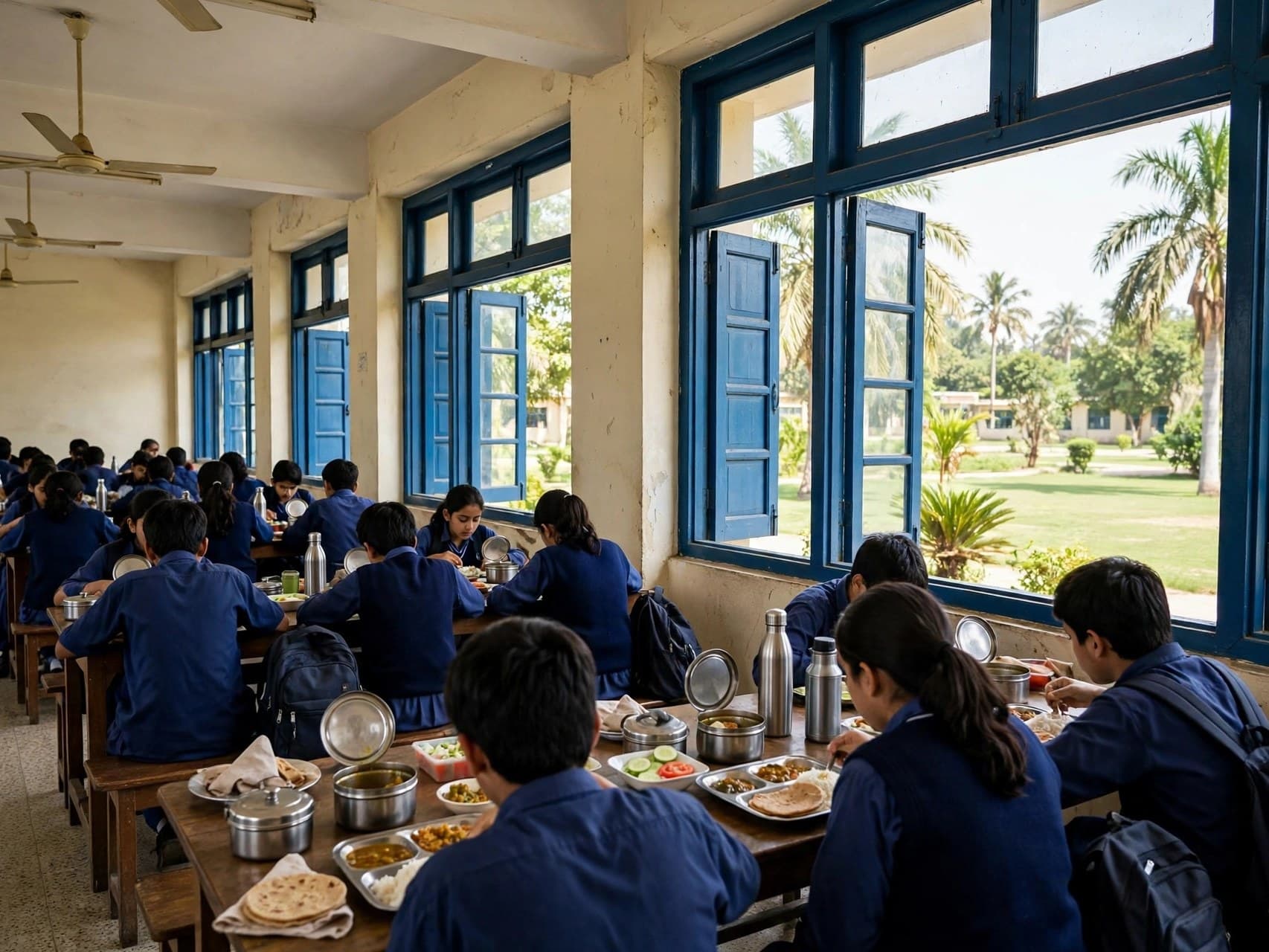
By one o'clock, minds are wandering and stomachs are rumbling, and the whole school drifts towards the cafeteria with lunchboxes in hand. It is easy to treat the lunch break as a gap between the real business of lessons, but a healthy school lunch does serious work: it refuels children for the afternoon and gives them half an hour of being friends instead of pupils.
Thirty Minutes That Matter
Lunch at our tables is unhurried on purpose. Children sit with their friends, swap stories from the morning, and eat at a human pace instead of racing back to class with the food half finished. Teachers eat nearby, and a good deal of quiet growing up happens across those tables — conversation, manners, and the pleasure of feeding yourself after a morning of hard thinking.
It is also, not incidentally, the happiest noise in the building. A silent cafeteria at one o'clock would worry us far more than a loud one.
What a Healthy School Lunch Actually Looks Like
Parents sometimes ask us what to pack, and the honest answer is that the best lunchboxes are usually the simplest. A roti or paratha with last night's sabzi or daal, a boiled egg, a sandwich with something green in it — real food, in a portion a child can actually finish, beats an expensive lunchbox full of packets.
Fruit travels well and children will eat it: a banana, an apple, a few guava slices in season. And please, a bottle of water. Fizzy drinks and a bag of crisps are fine as a Friday treat, but as the whole lunch they leave a child full and hungry at the same time — full of salt and sugar, hungry for anything that would keep them going until four o'clock.
One more small tip from years of watching lunchboxes: pack food your child already likes, in its ordinary home form. Grand experiments tend to come back uneaten, and a child who trades away a good lunch for somebody else's biscuits has not really been fed, however impressive the box looked at seven in the morning.
Clean Tables and Good Habits
Hands are washed before lunch, and each child is responsible for their own space: plate and scraps cleared, chair pushed in, table left clean for whoever comes next. It takes a week of reminding at the start of term and then it simply runs itself.
The habit we are proudest of is the quietest one. If a child has forgotten their lunch, their tablemates share — nobody is asked, nobody makes a speech about it. It happens most days, and the teachers have learned to pretend not to notice.
Sharing is also how children first meet the tastes of other homes: another family's paratha recipe, a pickle that clears the sinuses, a sweet somebody's grandmother made. A good part of the food of Shujabad and Multan passes across our tables over a school year, and the children are cheerful connoisseurs of all of it.
Fed Children Learn Better After Lunch
Every teacher knows the difference between a class that has eaten well and a class that has not. Concentration in the two o'clock lesson, the patience for a hard maths problem, the temper a child can hold when something goes wrong — all of it runs partly on lunch. When a child is unusually tired or irritable in the afternoon, the first question an experienced teacher asks is a gentle one: what did you eat today?
A good lunchbox is teamwork between home and school, and we are grateful to the parents who pack them with such care. If you would like to see our cafeteria — and everything else — admissions are open, so call or WhatsApp +92 312 6621457 and come at lunchtime. It is the happiest hour of our day.
Admissions Open in Shujabad & Multan
Fees from Rs. 1,500/month. Scholarships available for deserving students. Visit us Mon–Sat, 8 AM to 4 PM, or call us today.
Read Next