Technology · 3 min read
The Computer Lab: Real Skills, and a First Gentle Look at AI
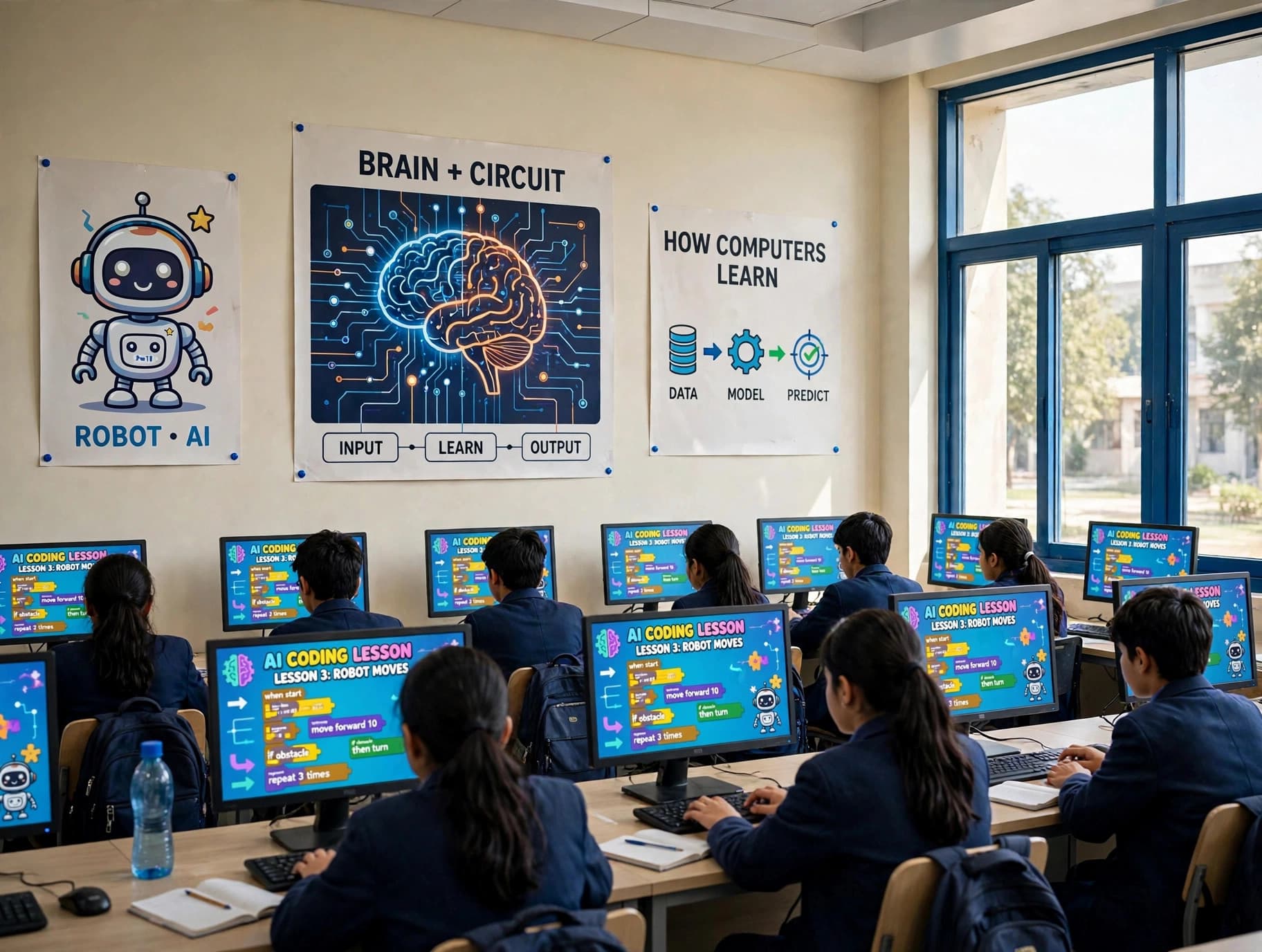
Ask a child what happens in the computer lab and the honest ones will say: 'We learn the computer properly.' That is the aim. Not games as a reward, not typing the same paragraph all term, but real, usable skill — files saved and found again, documents made neatly, information searched for and doubted properly. And on the wall of our computer lab, between the rows of screens, hang three charts that start some of the best questions of the year: a friendly robot, a glowing brain wrapped in circuits, and a simple chain that reads data, model, predict. This is where our students first meet the idea of AI.
More Than Typing Practice
Typing matters — a student who hunts for every key will always write less than they know. So yes, our younger students practise the keyboard properly, posture and fingers in the right places. But typing is the floor of the subject, not the ceiling. By Primary classes, students are making documents with headings and pictures, saving work in folders with sensible names, and finding it again next week without tears.
Middle and Secondary students move to work that looks like the real world: a neat table of their test marks, a presentation on a science topic, a spreadsheet that actually adds up. Every task is small, finished and shown. Confidence in this room is built the same way as everywhere else in school — one completed piece of work at a time.
The Charts on the Wall: A First Idea of AI
We put the charts up because children were already asking. They had heard AI mentioned at home, on television, everywhere. The brain-and-circuit poster gives us a starting picture: a computer 'brain' is not magic, it is connections — millions of small ones, each doing something simple. The robot poster keeps the mood friendly. Robots in our lab are helpers in pictures, not villains in films.
The third chart does the real teaching: data, then model, then predict. A teacher explains it with a simple example children love. Show a computer a thousand pictures of cats, and it builds a model of 'catness'; show it a new picture, and it predicts. Then we ask the class what could go wrong — a model trained only on white cats, meeting a black one. The discussion that follows is worth a week of definitions.
What Our Computer Lab Teaches at Each Age
Early Years children meet the machine gently: the mouse, the keys with their names on, drawing with big brushes of colour on screen. Primary students add typing, documents and their first careful searches. Middle school brings presentations, spreadsheets and a serious start on internet safety. By Secondary, students handle multi-step projects — research, organise, present — the same rhythm they will use in college and at work.
Notice the pattern: every stage finishes something. A drawing printed and pinned up. A document with their name on it. A chart that adds up. Children remember finished work, and they ask for the next task themselves.
Safe Habits for a Connected World
Skill without safety would be a poor gift, so the lab has plain rules, repeated until they are boring: passwords are private like toothbrushes, strangers online are strangers, and anything that feels wrong gets shown to a teacher, not hidden. We teach children to ask a useful question of anything a screen tells them — who made this, and why do they want me to believe it?
These habits travel home with them, which is the point. Most of our students will meet the internet far more often on a phone than in our lab. We cannot sit beside them then. Habits can.
Computers will change again before our youngest students finish school — they always do. Typing carefully, thinking clearly about information, and understanding roughly how machines learn: those will not change. If you would like your child to build these skills with us, call or WhatsApp +92 312 6621457. Our office is open Monday to Saturday, 8 AM to 4 PM, and scholarships are available on merit and on need.
Admissions Open in Shujabad & Multan
Fees from Rs. 1,500/month. Scholarships available for deserving students. Visit us Mon–Sat, 8 AM to 4 PM, or call us today.