Technology · 4 min read
What Building a Small Robot Teaches a Child
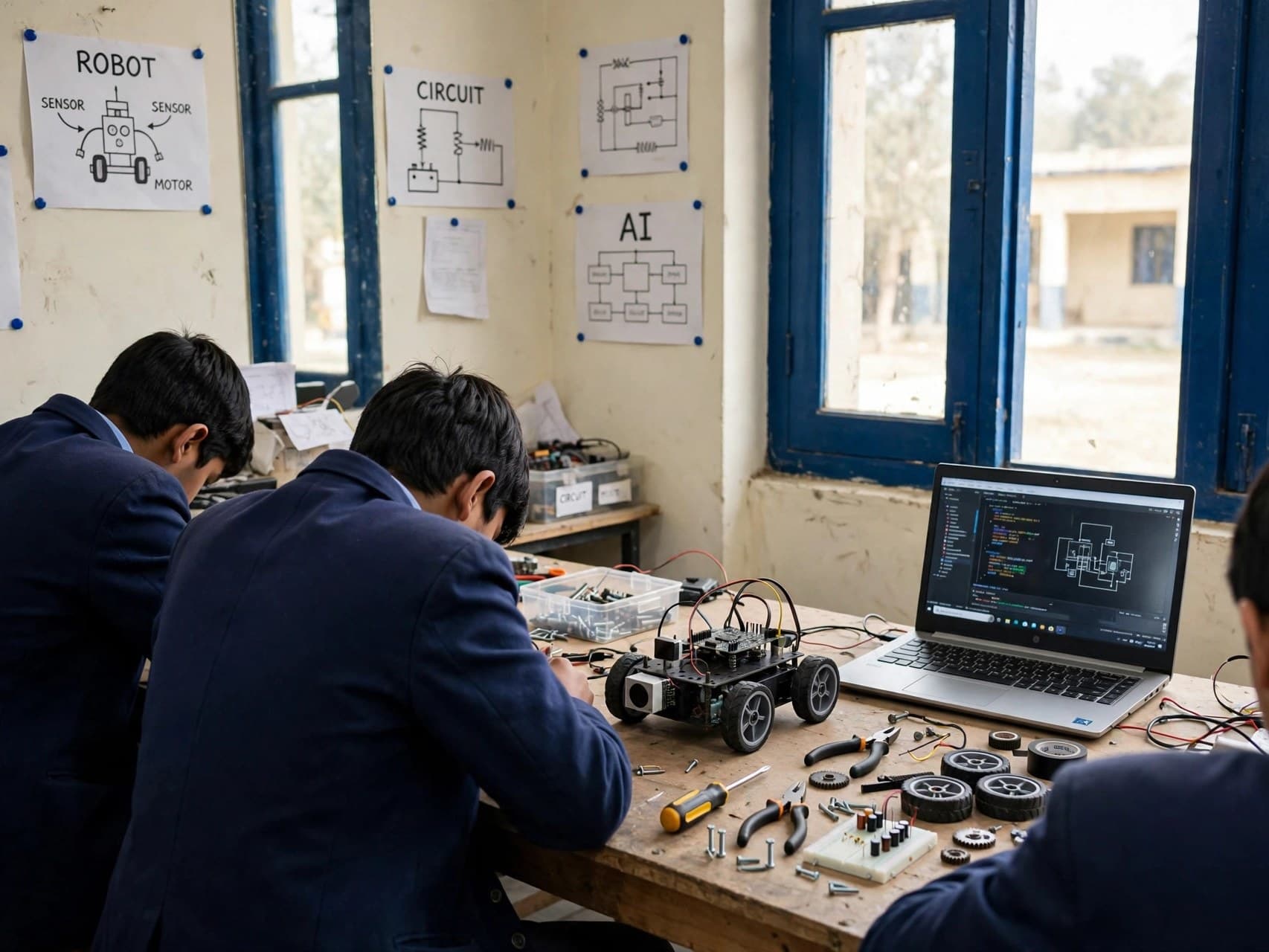
The first time a group of our students builds a robot, it drives into a wall. The second time, it turns too early and misses the line entirely. By the fourth try, something has changed — not just in the robot, but in the children. They are calmer, more systematic, quicker to test an idea instead of arguing about it. That is why robotics for kids has earned a permanent place in our week.
Patience, taught by a machine that does not care
A robot does exactly what you told it to do — not what you meant. When it misbehaves, the fault is somewhere in the instructions, and the only way forward is to check them one step at a time. Children who melt down over a wrong answer in a copybook learn, in the robotics lab, to say 'okay, what did we actually tell it?' That sentence is worth more than the robot.
Teachers watch for this shift and name it when it happens. Debugging is just problem-solving with the panic removed, and it transfers to maths, science and, frankly, to life.
Teamwork you cannot fake
Our robots are built in teams of three or four, and the roles are real: one builds, one codes, one tests and keeps notes. A team where one child grabs everything fails in ways everyone can see, usually within ten minutes. A team that divides the work and talks to each other finishes, and finishes prouder.
We rotate the roles on purpose. The quiet child who never volunteers discovers she is the most careful coder in the group. The confident builder learns that his structure means nothing if nobody documented the wiring.
Robotics for kids is really logic in disguise
Underneath the motors sits a simple idea: if this, then that. If the sensor sees black, turn left. If not, go straight. Children absorb sequencing, conditions and cause-and-effect by using them, the same way they absorb grammar by speaking. By the time formal computer concepts arrive in later classes, the thinking is already in place.
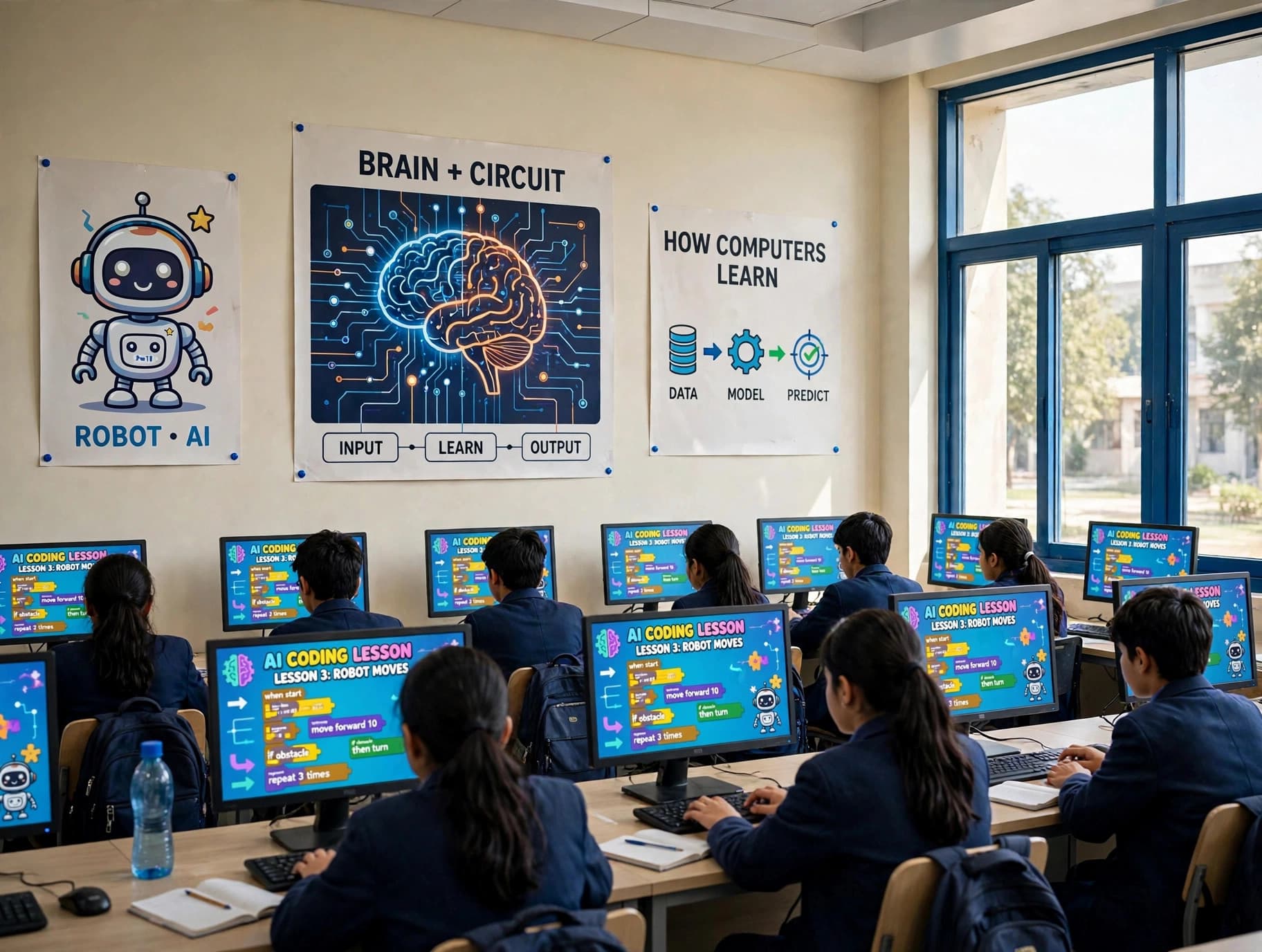
This is also why we teach coding alongside robotics. Code on a screen can feel abstract; code that makes a physical machine move across the table is unforgettable.
Coding is the new basic skill
We are not claiming every child will become a programmer, any more than writing lessons claim every child will become a novelist. But a generation growing up around automated everything should understand, at a basic level, how the machines around them take instructions. Robotics and coding give them that literacy early, in our Shujabad and Multan classrooms, with a teacher in the room and a robot on the desk — not alone with a video.
Parents ask whether it is too early for all this. Watch a session and judge. The children are not staring at code on a screen for an hour; they are on their feet, arguing cheerfully about wheel sizes, measuring distances with a ruler and cheering when the robot finally parks itself in the box. It is the most physical computer lesson you will ever see.
If your child lights up at the sight of wires and wheels — or if they need a gentler way into logical thinking — come and watch a robotics session with us. Call or WhatsApp +92 312 6621457 to plan a visit, Monday to Saturday, 8 AM to 4 PM.
Admissions Open in Shujabad & Multan
Fees from Rs. 1,500/month. Scholarships available for deserving students. Visit us Mon–Sat, 8 AM to 4 PM, or call us today.
Read Next