Arts · 3 min read
Harmonium, Tabla and Guitar: The Sound of Our Music Room
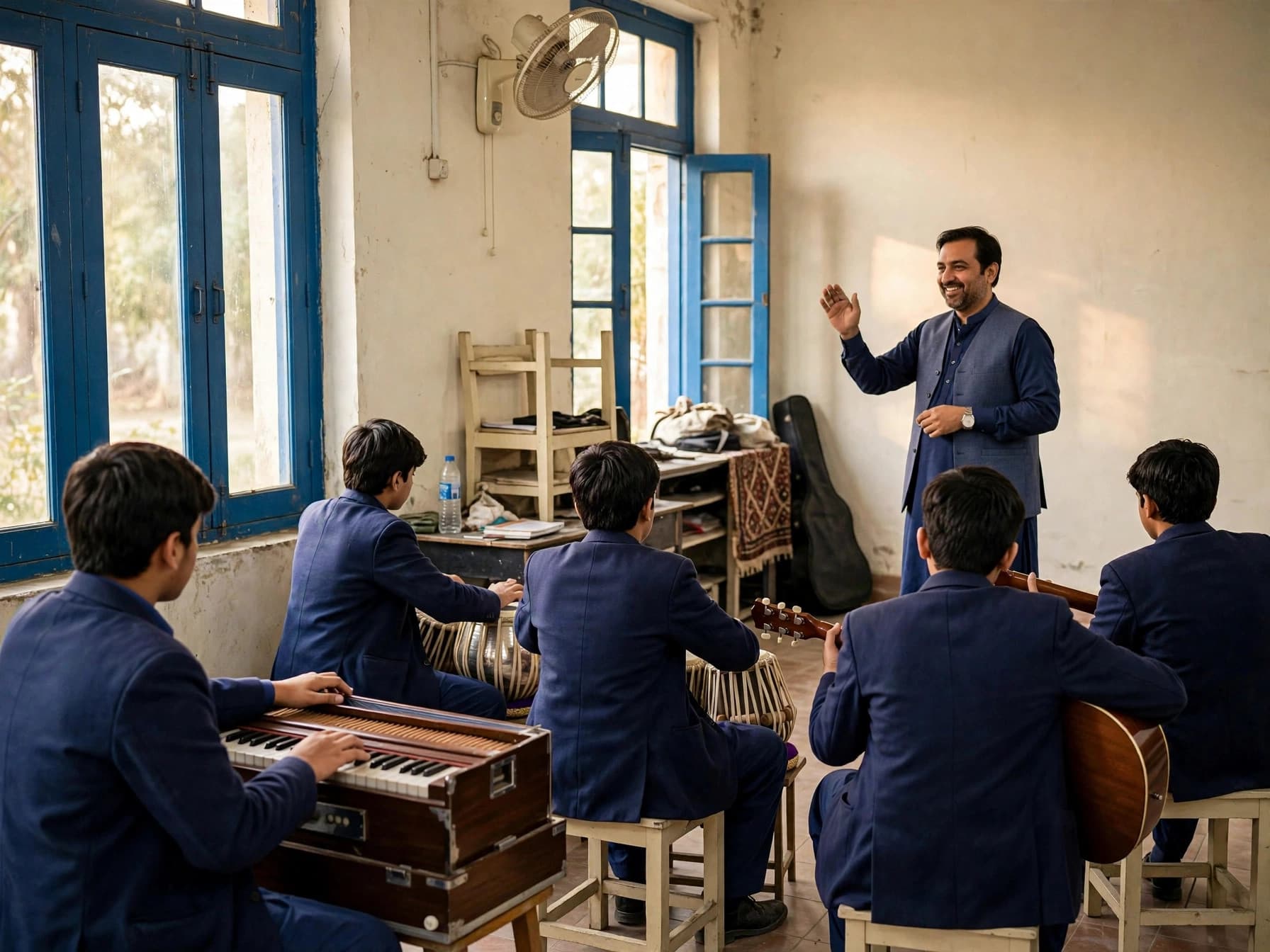
Walk past our music room on a Tuesday afternoon and you will hear it before you see it: a harmonium finding its notes, a tabla keeping steady time, and a roomful of children trying to sing together and mostly succeeding. Our music classes are not a treat squeezed in when the 'real' work is done. They are a proper part of the school week, and for many of our students they are the period they describe most happily when they get home.
Three Instruments, Three Kinds of Patience
The harmonium asks a child to do two things at once — pump the bellows with one hand and find the keys with the other — and it refuses to hurry. The tabla is stricter still. Miss the beat and everyone knows, because the whole song wobbles. The guitar is the honest one of the three: sore fingertips for the first few weeks, then one clean chord, then two, and suddenly a tune the child recognises.
None of this comes quickly, and that is rather the point. Each instrument teaches a child to stay with something difficult for longer than feels comfortable, in a room where mistakes are loud, normal and quickly forgiven.
There is also the small matter of listening. A harmonium player who does not listen drowns out the singer, and a tabla player who does not listen slowly drags the whole song along at his own speed. Playing together means hearing the person next to you — a lesson, we often think, that most adults could still use.
What Music Classes Give a Child Beyond the Notes
Music is full of hidden maths. Beats are counted in groups, rhythms divide into halves and quarters, and a song only works when the pattern holds from start to finish. Our teachers notice that children who play an instrument often spot number patterns in the classroom a little faster — they have been hearing fractions, in a way, for months.
There is discipline in it too. You cannot cram rhythm the night before a performance the way you might memorise a list of dates. Ten honest minutes of practice, most days, will beat an hour of panic every time. Children learn that in their fingers, not from a lecture.
It works the other way round as well: a hard sum makes more sense to a child who has already felt, in their hands, what a half and a quarter of something actually are.
The Shaky First Performance
Ask any adult and they remember standing up in front of a room for the first time. For our students it often happens in music — a short piece in assembly, hands shaking slightly, the whole school watching. It does not have to be perfect. It just has to be finished.
Then comes the applause, and something changes. We have watched children who barely raise a hand in class stand a little straighter after performing, and volunteer a little sooner the next time. Confidence is rarely taught from a book. Mostly, it is practised in moments exactly like that one.
Every Child Plays
Music at Apna Home School is not a reward for the talented few. There are no auditions to join a class lesson, and nobody is excused for being 'not musical'. Some children will always love the tabla best, some will sing, and some will discover they are excellent at keeping everyone else in time.
What matters to us is simpler: every child leaves school having made music with other people, in a group, out loud. That is a small thing to say and a surprisingly large thing to carry into adult life.
If your child hums while doing homework and drums on the table at dinner, they will feel at home in our music room. Admissions are open — call or WhatsApp us on +92 312 6621457 and come and hear it for yourself.
Admissions Open in Shujabad & Multan
Fees from Rs. 1,500/month. Scholarships available for deserving students. Visit us Mon–Sat, 8 AM to 4 PM, or call us today.
Read Next