Campus · 3 min read
Why Break Time Is Serious Business
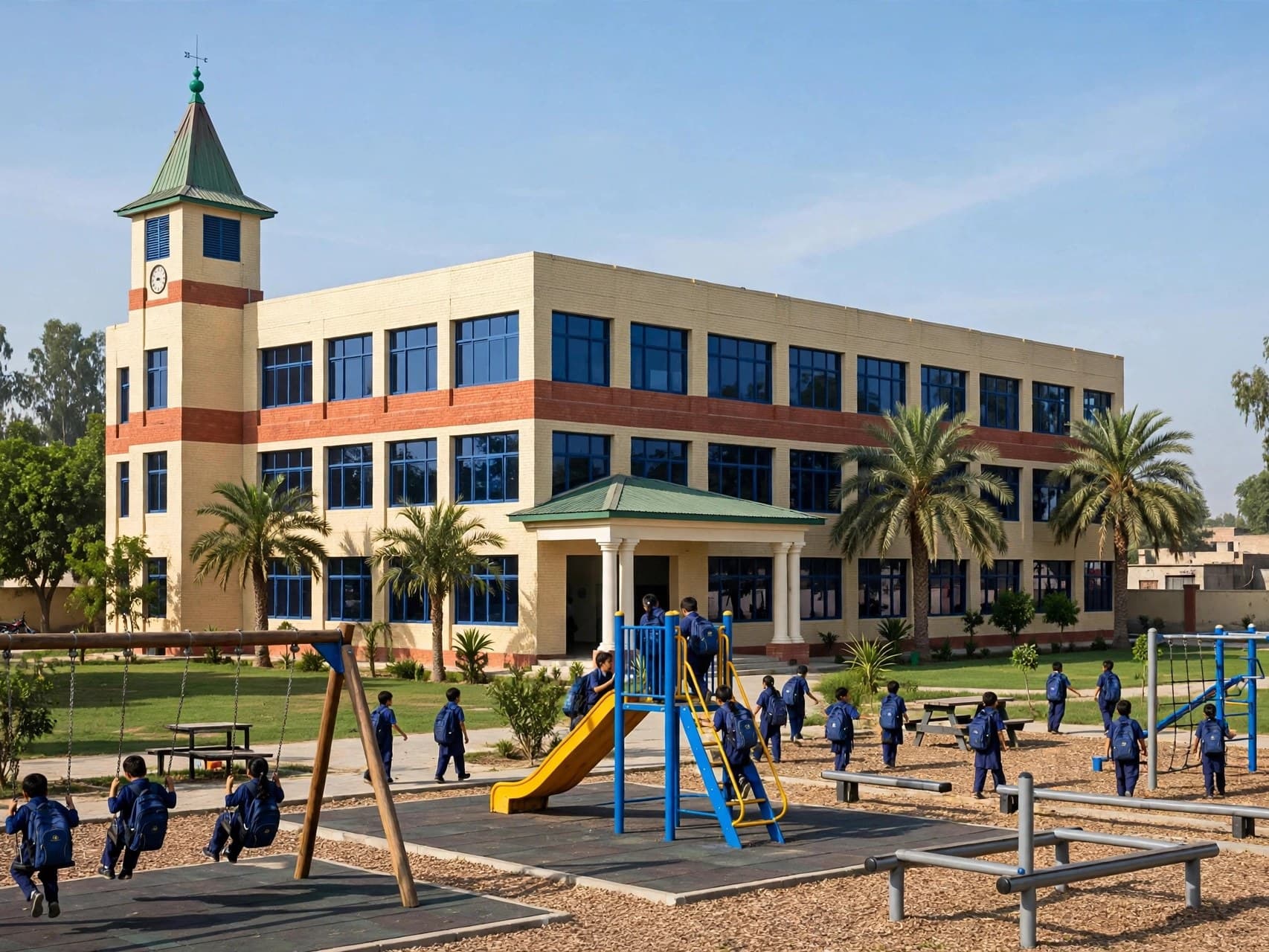
Visitors sometimes pass our school playground and see only swings, a slide and a fair amount of noise. We see something else: the busiest room in the school, and the only one without desks. For young children especially, break time is not a pause in the school day. It is a working part of it — and a surprisingly serious one.
Strong Bodies Start Small
Watch a five-year-old on the climbing frame and you are watching a workout designed by instinct. Arms and shoulders grow stronger with every pull up, balance improves with every careful step, and the endless running does the rest. Children who move well in the morning also sit better afterwards — small bodies were never built to be still for six hours.
There is courage in it too. The top of the slide looks very high when you are small, and the first ride down, all alone, is a genuine achievement. Our teachers see children measure themselves against the playground all year: last term it was frightening, this term it is easy, next term they are helping someone smaller up the steps.
And then there is falling over, which happens to everyone. Knees get grazed, and within a term most children have learned the useful art of getting up, dusting themselves off, and judging whether it is a plaster injury or a carry-on injury. They are nearly always right.
Friendships Are Made Out Here
Classrooms are organised by teachers, but the playground is organised by children, and that is where the social learning happens. Swings have to be shared. Turns have to be waited for. Games need rules that everyone agrees to, or they fall apart in two minutes.
Quarrels happen, of course — usually over nothing, and usually fixed by the children themselves before a teacher has even noticed. Making up after an argument, without an adult arranging it, is one of the most useful skills a child can practise, and break time offers a chance to practise it every single day.
Parents sometimes worry that break-time friendships will distract children from their lessons. In our experience it works the other way round: a child who has friends waiting at lunch walks into the afternoon lesson feeling the school is on their side.
Safety on the School Playground Comes First
Freedom works because the boundaries are clear. A teacher is always on duty in the playground, the equipment is checked regularly, and the rules are few and known by everyone: one child at a time on the slide, no pushing in the queue, and the little ones get first claim on the gentlest corner of the ground.
We teach children to look out for each other as well. An older student who spots a crying child in the corner and brings them to a teacher has learned something worth more than the lesson they were missing indoors.
Why a Good Break Makes a Better Afternoon
Ask any primary teacher and they will tell you the same thing: the class that has run off its energy at break settles faster, listens longer and argues less. Children come back in with fresh air in their lungs and their friendships repaired, ready to be pupils again. Protecting break time is not softness. It is good teaching.
We guard the full break, too. When a lesson runs long it is tempting to borrow five minutes from playtime, but those five minutes are doing work the rest of the timetable cannot manage without.
For our youngest children in Early Years, ages 3 to 5, the playground is where school first becomes a place they love. If you are choosing a first school for your little one, come and see break time with your own eyes — call us on +92 312 6621457 to arrange a visit.
Admissions Open in Shujabad & Multan
Fees from Rs. 1,500/month. Scholarships available for deserving students. Visit us Mon–Sat, 8 AM to 4 PM, or call us today.
Read Next