Student Life · 4 min read
Studying Together Under the Courtyard Tree
If you visit our campus in the break between classes, you'll find a small crowd under the big tree in the courtyard — books open, heads together, one student explaining a maths problem to three others like a tiny professor. Nobody assigned those seats. The students chose them. Watching them over the years has taught us more about study habits than any textbook: children study best the way they do everything else — together, regularly, and without it feeling like a punishment.

Group study, done the right way
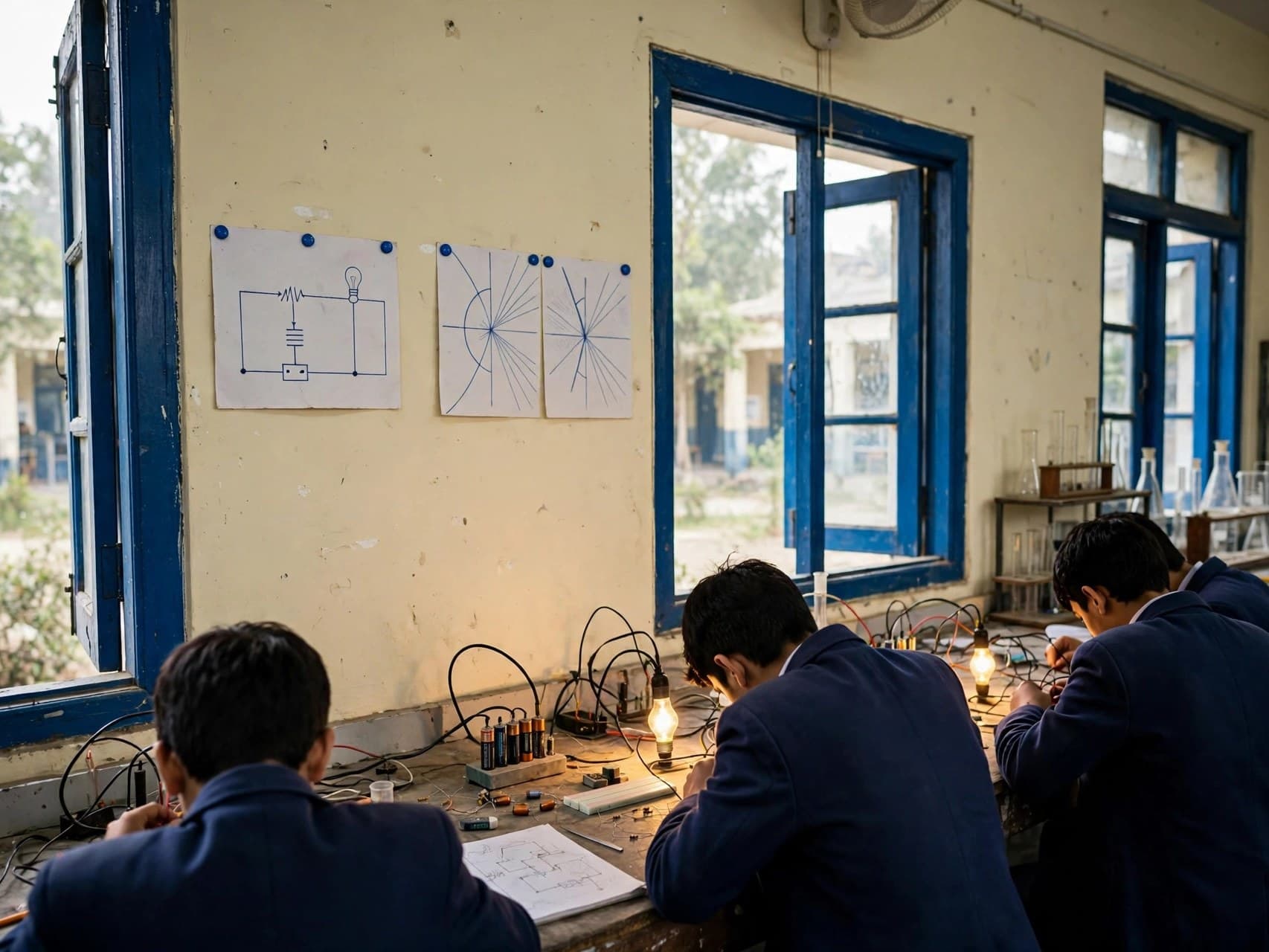
Group study works when everyone at the bench has a job. In our courtyard groups, one student explains, the others question. Explaining is the secret ingredient: a student who can teach the chapter on fractions to a friend owns that chapter in a way re-reading never gives. The listeners get the topic in a friend's words, which sometimes land better than a teacher's.
It goes wrong, of course, when the bench becomes a chat club. Our teachers wander past often enough to keep things honest, and the groups have their own rule: books open first, gossip after the last question. It mostly works. When it doesn't, the homework shows it, and the group sorts itself out.
There's one more thing that bench teaches, quietly: asking for help is normal. A student who says 'I didn't understand this' in front of friends at twelve will say it in a college classroom at eighteen. That ease is worth as much as any single chapter.
Study habits that work for Class 5 to 10
Forget heroic five-hour sessions. The students who do well here study in small daily pieces — forty minutes after school, same time, same place. A Class 6 student reviewing today's lesson for twenty minutes remembers it in March. A student meeting it for the first time in March has a much harder job.
Three habits we push gently all year: revise the same day, not the same week. Write while you revise, because the hand remembers what the eye skips. And keep one notebook for mistakes — every wrong answer from every test, collected in one place. Before exams, that notebook is gold.
Reading counts too, and not only textbooks. Twenty minutes with any book — a story, a science magazine, an old novel borrowed from the library shelf — builds the vocabulary that quietly lifts marks in every subject, even mathematics word problems. A child who reads daily rarely fears a long exam question, because long passages stopped being scary a long time ago.
A homework routine that actually sticks
At home, routine beats motivation every time. Pick a fixed hour — after dinner works for most families — and protect it. The phone charges in another room. Younger children in Class 5 need about an hour; by Class 10, two focused hours beat four distracted ones.
Parents ask us how much they should help. Our answer: sit nearby for the first week while the routine forms, then step back. Check that homework is done, not that every answer is perfect. A page with the child's own mistakes teaches the teacher something. A page polished by a parent teaches nobody anything.
Good study habits aren't a talent some children are born with. They're a bench, a fixed hour and friends who explain things — built slowly, day by day. If you'd like to see our campus and its famous tree in person, call or WhatsApp us on +92 312 6621457. Office hours are Monday to Saturday, 8 AM to 4 PM.
Admissions Open in Shujabad & Multan
Fees from Rs. 1,500/month. Scholarships available for deserving students. Visit us Mon–Sat, 8 AM to 4 PM, or call us today.
Read Next